The Ultimate Guide to the 50 Paise Indian Coin: History, Value, Rarity & Collector Insights
The 50 paise coin was once a common and essential part of everyday transactions in India. Today, it's more than just a coin—it's a collectible, a piece of history, and for some, an investment. This article offers a detailed look at the journey of the 50 paise Indian coin, its significance, its collectible value, and how enthusiasts can identify and trade these coins.
1. History of Indian Coinage and Decimalization
Before decimalization in 1957, Indian currency followed a complex structure: 1 rupee = 16 annas = 64 paise. After independence, India adopted the decimal system, and new coins including the 50 paise denomination were introduced. The 50 paise coin replaced the older 8 anna coin, becoming half of a rupee in the decimal system.
2. Introduction of the 50 Paise Coin
The first 50 paise coin was minted in 1964. It was made from nickel and bore the Ashoka Lion Capital on the obverse side. Initially, the coin had a substantial weight and bold design, reflecting India's economic and political identity during its early post-independence years.
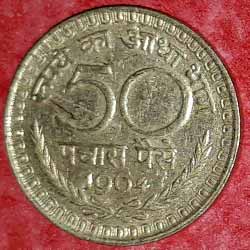

3. Design Evolution Over the Years
1964-1983: Nickel Coins
-
Weight: 5g
-
Diameter: 24mm
-
Features: Ashoka Lion, denomination, and year
1984-1991: Cupro-Nickel
-
Weight: 3.79g
-
Diameter: 22mm
-
Features: Lighter design, updated fonts
1992-2002: Stainless Steel
-
Weight: 3.5g
-
Sleek edges, plain reverse with denomination
2003-2011: New Stainless Steel Design
-
Weight: 2.9g
-
Simpler design, economic minting strategy
4. Mint Marks and Their Locations
Mint marks help identify where a coin was produced.
| Symbol | Mint Location | Notes |
|---|---|---|
| ● | Mumbai | Most common |
| ✩ | Hyderabad | Slightly rarer |
| ⬫ | Noida | Rare (older years) |
| None | Kolkata | Rare, no mark |
5. Commemorative 50 Paise Coins
Some 50 paise coins were released to commemorate events:
-
1984: "Food and Shelter for All"
-
1991: Indira Gandhi Birth Anniversary
-
1996: Literacy Campaign
These coins are often more valuable to collectors.
6. Rarity and Value: What Makes a 50 Paise Coin Valuable?
Several factors influence the value of a 50 paise coin:
-
Year of minting
-
Mint mark
-
Error coins (double strike, off-center, misprint)
-
Limited mintage
-
Condition (uncirculated or proof)
Rare examples can be worth anywhere between ₹500 to ₹10,000 depending on rarity and condition.
7. List of Rare and High-Value 50 Paise Coins
-
1964 Nickel Coin: First release, valued at ₹300 to ₹1000
-
1985 Noida Mint: Extremely rare, up to ₹5000
-
1991 Indira Gandhi with Mint Error: Value up to ₹10,000
-
2005 Misprint Series: Off-centre designs worth ₹300–₹500
8. How to Identify a Rare 50 Paise Coin
-
Look for mint errors
-
Check the year and compare with mintage stats
-
Identify mint marks
-
Evaluate coin condition (grading)
9. Coin Grading: Understanding Coin Condition
Coin grading affects the market value.
| Grade | Description |
| UNC | Uncirculated, pristine condition |
| XF | Extremely fine, minor wear |
| VF | Very fine, light circulation marks |
| F | Fine, noticeable wear |
| G | Good, heavy wear but readable |
10. How Much Is a 50 Paise Coin Worth in 2025?
-
Common coins: ₹10 to ₹50
-
Moderate rarity: ₹50 to ₹200
-
Rare: ₹500 to ₹10,000
11. Where to Sell or Buy 50 Paise Coins
-
Online platforms: eBay, OLX, Indiamart
-
Numismatic exhibitions
-
Coin dealers and antique shops
-
Facebook groups and forums
12. Legal Aspects of Selling Old Coins
As per Indian law:
-
Selling coins for numismatic value is legal
-
Selling for face value or fraud is not
-
Always include proper billing and authentication
13. Investment Potential of 50 Paise Coins
While not every coin is a goldmine, a rare 50 paise coin in pristine condition can appreciate significantly in value, especially in numismatic circles.
14. Common Myths and Misconceptions
-
Myth: All old coins are valuable
-
Fact: Only specific years and types hold collector value
-
Myth: Noida mint is fake
-
Fact: Noida mint is legitimate but less common
15. The Future of Coin Collecting in India
Coin collecting is gaining popularity, and with the phasing out of smaller denominations, the 50 paise coin is poised to become more historically significant and collectible.
16. FAQs
Q: Is the 50 paise coin still legal tender? A: No, the RBI demonetized it in 2011.
Q: Where can I get my coin appraised? A: At a coin fair or through reputed numismatists online.
Q: Can I sell coins on OLX or eBay? A: Yes, as long as it’s for collectible purposes.
List of Frequently Asked Questions (FAQs) about 50 Paise Indian Coin: History, Value, Rarity & Collector Insights
Introduction: Understanding the 50 Paise Coin in India
The 50 paise coin, historically the half-rupee coin, has played a significant role in India’s monetary system. Introduced in the pre-decimal era, it has evolved over decades to reflect India’s economic, cultural, and numismatic heritage.
While once a common currency, 50 paise coins are now primarily collectors’ items, with many older editions considered rare and valuable. This guide answers all frequently asked questions about the 50 paise coin, including its history, design evolution, minting, rarity, collector value, and investment potential.
Whether you are a beginner collector, hobbyist, or numismatics investor, this article provides complete insights into India’s iconic 50 paise coin.
Frequently Asked Questions (FAQs)
1. What is the 50 Paise Coin in India?
The 50 paise coin represents half of one Indian rupee. First issued in India’s post-independence era, it was widely circulated until recent years. Today, it is primarily a collector’s coin, with many editions fetching high collector value due to rarity, historical significance, and metal composition.
2. When was the 50 Paise coin first issued?
-
Pre-independence: India used the half-rupee coin under British rule.
-
Post-independence: The modern 50 paise coin was first issued in 1950, featuring symbols of India’s sovereignty.
Over time, designs evolved to reflect India’s economic reforms, cultural motifs, and commemorative events.
3. Is the 50 Paise coin still legal tender?
Yes. The 50 paise coin remains legal tender, though it is rarely used in daily transactions due to inflation and declining purchasing power. Most coins are preserved for collection purposes.
4. What are the different types of 50 Paise coins?
50 paise coins are categorized based on:
-
Era: Pre-decimal vs decimal (post-1957)
-
Material: Copper-nickel, nickel-brass, stainless steel
-
Shape: Round, square, or scalloped (special editions)
-
Commemorative vs circulation coins
Popular editions include:
-
Lion Capital of Ashoka series (1950s–1980s)
-
Decimal series (1964 onwards)
-
Commemorative editions celebrating national events
5. What is the design of the 50 Paise coin?
Obverse (Front):
-
Lion Capital of Ashoka (National Emblem)
-
“भारत” (Bharat) and “INDIA”
-
Denomination or face value
Reverse (Back):
-
Denomination “50 Paise”
-
Year of minting
-
Motifs reflecting culture, industry, or national achievements
-
Some editions featured commemorative designs like Gandhi Jayanti, Independence Day, or state symbols
6. What are the physical specifications of 50 paise coins?
-
Diameter: 19–25 mm (varied by edition)
-
Weight: 2–4 grams (depending on material)
-
Metal composition: Copper-nickel, nickel-brass, stainless steel
-
Edge: Smooth, reeded, or patterned
Collectors often check diameter, weight, and edge type to verify authenticity.
7. Which mints produced 50 paise coins in India?
Major Indian mints producing 50 paise coins include:
-
Mumbai Mint (♦ Diamond)
-
Hyderabad Mint (★ Star)
-
Noida Mint (● Dot)
-
Kolkata Mint (No mark)
The mint mark, usually below the year, is essential for identifying origin and assessing rarity.
8. Are some 50 paise coins rarer than others?
Yes. Rarity depends on:
-
Mint location
-
Year of issue
-
Mintage numbers
-
Special commemorative editions
-
Errors and variations
For example, coins from the 1950s and 1960s with low mintage are highly sought after.
9. What are commemorative 50 paise coins?
Commemorative 50 paise coins celebrate:
-
National leaders and freedom fighters
-
Independence and Republic Day anniversaries
-
Cultural and scientific milestones
-
Government initiatives
They usually have unique designs, limited mintage, and higher collector value.
10. Are commemorative 50 paise coins legal tender?
Yes. Officially issued commemorative coins are legal tender, though most collectors preserve them in uncirculated condition.
11. What is the collector value of 50 paise coins?
Collector value depends on:
-
Condition (circulated, uncirculated, proof)
-
Mintage
-
Mint errors
-
Commemorative significance
Estimated Collector Value (2023–2026)
| Coin Type | Condition | Value (INR) |
|---|---|---|
| Circulated (Common) | Standard | ₹10–₹50 |
| Uncirculated (Post-1980s) | Standard | ₹50–₹200 |
| Commemorative | UNC or Proof | ₹300–₹2,500 |
| Rare Pre-1980s Coin | Proof / Collector | ₹3,000–₹50,000+ |
| Mint Error Coins | Exceptional | ₹10,000–₹1,00,000+ |
12. What are common mint errors for 50 paise coins?
Common errors include:
-
Off-center strikes
-
Double die impressions
-
Misaligned inscriptions
-
Missing or inverted mint marks
Coins with these errors are rare and highly collectible.
13. Are 50 paise coins a good investment?
While circulation coins are mostly of face value, proof editions, limited mintage commemorative coins, and mint errors can appreciate over time, making them a worthwhile investment for collectors.
14. Should collectors clean 50 paise coins?
No. Cleaning can:
-
Damage the coin’s surface
-
Remove natural patina
-
Reduce numismatic value
Coins are best preserved in original condition.
15. How should 50 paise coins be stored?
-
Use PVC-free coin flips or capsules
-
Keep in dry, stable environments
-
Separate circulated coins from proof or commemorative editions
-
Avoid handling with bare hands to prevent scratches
16. Are counterfeit 50 paise coins common?
Counterfeits are rare but exist, particularly for older commemorative editions. Verification can be done via:
-
Checking mint mark and year
-
Weight, diameter, and metal composition
-
Consulting numismatic experts or professional grading services
17. How do professional collectors evaluate 50 paise coins?
Collectors consider:
-
Year of issue and mint mark
-
Coin condition (circulated, UNC, or proof)
-
Rarity and mintage
-
Historical or commemorative significance
-
Auction and catalog trends
18. Do metal prices affect 50 paise coin value?
No. Most 50 paise coins are made of base metals, so their numismatic value is determined by rarity, condition, and demand, not intrinsic metal content.
19. Common myths about 50 paise coins
-
“All 50 paise coins are rare and valuable”
-
“Older coins automatically fetch high prices”
Only low-mintage, proof, commemorative, or error coins are valuable.
20. How can beginners start collecting 50 paise coins?
-
Start with post-1980s uncirculated coins
-
Focus on mint marks, year, and design variations
-
Gradually expand to older coins and commemorative editions
-
Learn to identify minor mint errors
-
Avoid inflated prices based on viral social media claims
21. Are 50 paise coins accepted everywhere in India?
Yes. They remain legal tender, though most are rarely used in daily transactions.
22. Can banks or RBI buy 50 paise coins from collectors?
No. Banks accept coins at face value only. Rare editions are sold via:
-
Numismatic dealers
-
Auctions
-
Collector forums
23. Can 50 paise coins appreciate in value over time?
Yes. Coins with:
-
Proof or commemorative editions
-
Low mintage
-
Mint errors
…can appreciate significantly, while standard circulation coins mostly retain face value.
24. Educational value of 50 paise coins
-
Understanding India’s monetary history
-
Learning coin design, minting, and metallurgy
-
Exploring national history and culture
-
Practical introduction to numismatics for beginners
25. Notable 50 paise coins for collectors
-
Pre-1980s copper-nickel coins
-
Decimal series (post-1964) coins
-
Commemorative editions celebrating Independence or Republic Day
-
Mint error coins
26. Common mistakes beginners make
-
Believing exaggerated online claims
-
Overpaying for common coins
-
Cleaning coins
-
Ignoring mint marks and condition
27. How can collectors verify authenticity?
-
Compare with official RBI references
-
Check mint mark, year, and design
-
Verify weight, diameter, and metal composition
-
Consult numismatic experts for grading or authentication
28. How many 50 paise coins were minted?
Mintage varies by year and edition. Older coins (1950s–1970s) often had lower mintage, increasing collector value. Modern circulation coins have higher mintage but limited numismatic interest.
29. Were there commemorative 50 paise editions?
Yes. Commemorative editions celebrated:
-
National events
-
Cultural and scientific achievements
-
Important anniversaries
These coins are more valuable than standard circulation coins.
30. Final Verdict: Should You Collect 50 Paise Coins?
Yes. The 50 paise coin is:
-
Historically significant, reflecting India’s monetary evolution
-
Collector-friendly, suitable for beginners and advanced numismatists
-
Valuable for proof, commemorative, and low-mintage editions
Proper preservation and knowledge of mint marks, mintage, and condition ensure maximum collector value.
Conclusion: Preserving India’s Half-Rupee Legacy
The 50 Paise coin is more than currency—it is a window into India’s rich monetary and cultural history.
Collectors and enthusiasts can enjoy:
-
Historical significance spanning post-independence to modern India
-
Numismatic education on design, minting, and materials
-
Investment potential for rare and commemorative editions
From circulation coins to commemorative masterpieces, the 50 paise coin remains a timeless collector’s item in India’s numismatic landscape.
Conclusion
The 50 paise Indian coin, once just another unit in our wallets, has evolved into a valuable artifact. Whether you’re a collector, an investor, or simply someone who enjoys holding a piece of history, these coins offer insight into India's monetary evolution. With rising interest in numismatics, this is the perfect time to explore, collect, and cherish these little metallic gems.
*** For Buying and selling quires you can contact us to this Mail Id: gkarthikeyan2k@yahoo.com ********* Contact Us